Knowledge Articles

Optimize your solar ROI

Practical guidance from the Solect Services team: everything you need to keep your system performing at its peak, all in one place.

Data analytics dashboard
🖥️
Nugget 01
The Solect Customer Portal

The Customer Portal is your live window into your system’s performance. Track production, compare against projections, manage incentive records, and export reports — from any device, anytime.

What you can do
  • Live production monitoring — See how much energy your system is generating right now, charted against historical data.
  • Actual vs. projected output — Compare real generation against your system’s design targets to spot underperformance early.
  • Downloadable reports — Generate monthly or annual exports for finance teams, boards, or grant documentation.
  • Incentive tracking — View SREC, net metering, and other credits tied directly to your production data.
  • Service history — Look up past maintenance visits, repairs, and inspection notes in one organized view.
Customer Support &
Emergency Assistance

Contact our Services team at services@solect.com to learn more about your account. You can also chat with our website chatbot anytime for quick assistance. For after-hours emergencies, please call our Operations Control Center at 713-308-4242.

Energy monitoring and solar demand management
Watch & Learn
Demand Monitoring in Practice
See how Solect’s tools work and learn the steps you can take on high-demand days to protect your bottom line.
Watch on Vimeo
Nugget 02
Energy Demand Monitoring

Peak demand — the single highest energy draw in your billing period — can make up 30–50% of your electricity bill. Solect’s monitoring tools help you see it coming so you can act before the meter locks in a costly rate.

How it works for you
  • How demand charges work — Utilities base charges on your facility’s highest short-interval usage during the billing period, making even brief spikes costly.
  • Real-time demand monitoring — Continuous visibility into your building’s electrical usage, helping identify peak drivers and guide energy management decisions through cloud-based access.
  • Proactive Solect advisories — On forecasted peak days, Solect sends targeted alerts with recommended actions to help reduce your facility’s load during critical periods.
  • What to do on advisory days — Shift or reduce non-essential loads, pre-condition your space ahead of peak windows, and leverage battery storage to minimize reliance on grid power.
  • Solar + storage optimization — When paired with battery storage, excess solar energy can be stored and deployed during peak periods to effectively lower demand charges.
  • Built-in system enhancement — Demand monitoring is included as a standard feature in every Solect solar installation, supporting smarter energy use and long-term cost control.
Network connectivity router
📶
Nugget 03
Internet Intermittency

Your system generates power regardless of internet connectivity — but without a stable connection, your monitoring goes dark. Gaps in data can delay detection of real issues, complicate incentive reporting, and leave Solect’s NOC without visibility into your system’s health.

What to know
  • How data is transmitted — Your inverter or monitoring device sends performance data through your facility’s internet connection, enabling continuous oversight by Solect.
  • What a flat line means — “No data” in the portal does not necessarily indicate zero production; it often points to a loss of internet connectivity and should be investigated promptly.
  • Common causes — Router or modem issues, power outages, or disconnected equipment are the most frequent reasons for monitoring gaps.
  • First steps — Confirm your internet connection is active and reset your modem and router by powering them down, waiting briefly, and restarting.
  • When to call Solect — If connectivity is restored but data is still not reporting, contact Solect Services for further support and remote diagnostics.
Best Practice
Solar inverter and electrical equipment
⚙️
Nugget 04
Inverters

The inverter is the engine of your solar system — it converts DC electricity from your panels into the AC power your building uses. When an inverter faults or underperforms, output across the entire array suffers.

Maintenance & awareness guide
  • Inverter types — Commercial systems commonly use string or central inverters, each requiring specific care to maintain performance and longevity.
  • Outdoor protection — Inverters installed outdoors should be shielded from direct sun and weather exposure to prevent overheating and performance issues.
  • Shade and covers — Manufacturers recommend shade covers for string inverters to reduce heat buildup and protect system components.
  • Clearance and airflow — Maintain adequate space around inverters to keep debris away and ensure proper airflow for cooling.
  • Physical protection — Protective structures for central inverters guard against environmental exposure and accidental impact while supporting long-term reliability.
Safety Notice

Never open or service an inverter enclosure yourself. Inverters carry dangerous voltages even when disconnected from grid power. All inspections must be performed by Solect’s licensed electricians.

Commercial rooftop solar installation
💧
Nugget 05
Keeping Drains Clear

Solar panels are excellent at catching debris and concentrating it near drain openings. Blocked drains cause standing water that adds structural load, degrades roofing membranes, and can compromise your array’s mounting infrastructure.

Drain care essentials
  • Why arrays make it worse — Panels create sheltered channels where leaves, seeds, and debris accumulate faster than on an open roof, especially under panel edges and between rows.
  • Inspection frequency — Inspect drains at least twice per year: late spring after pollen season, and late fall after leaf drop. Buildings near trees may need quarterly checks.
  • Safe clearing procedure — Only trained roofing personnel should clear drains on an active solar rooftop. Never walk on or between panels. Solect’s PM visit includes drainage assessments.
  • Signs of pooling — After heavy rain, note any areas taking more than 48 hours to dry. Water rings or rust streaks near drain openings are warning signs needing prompt attention.
  • Bird deterrents — Nesting under panels contributes significantly to blockage. Ask Solect about critter guard installation to prevent debris accumulation at the array perimeter.
Roof Warranty Note

Many commercial roofing warranties require documented routine drain maintenance. Keeping inspection records supports warranty claims and demonstrates due diligence to your insurer.

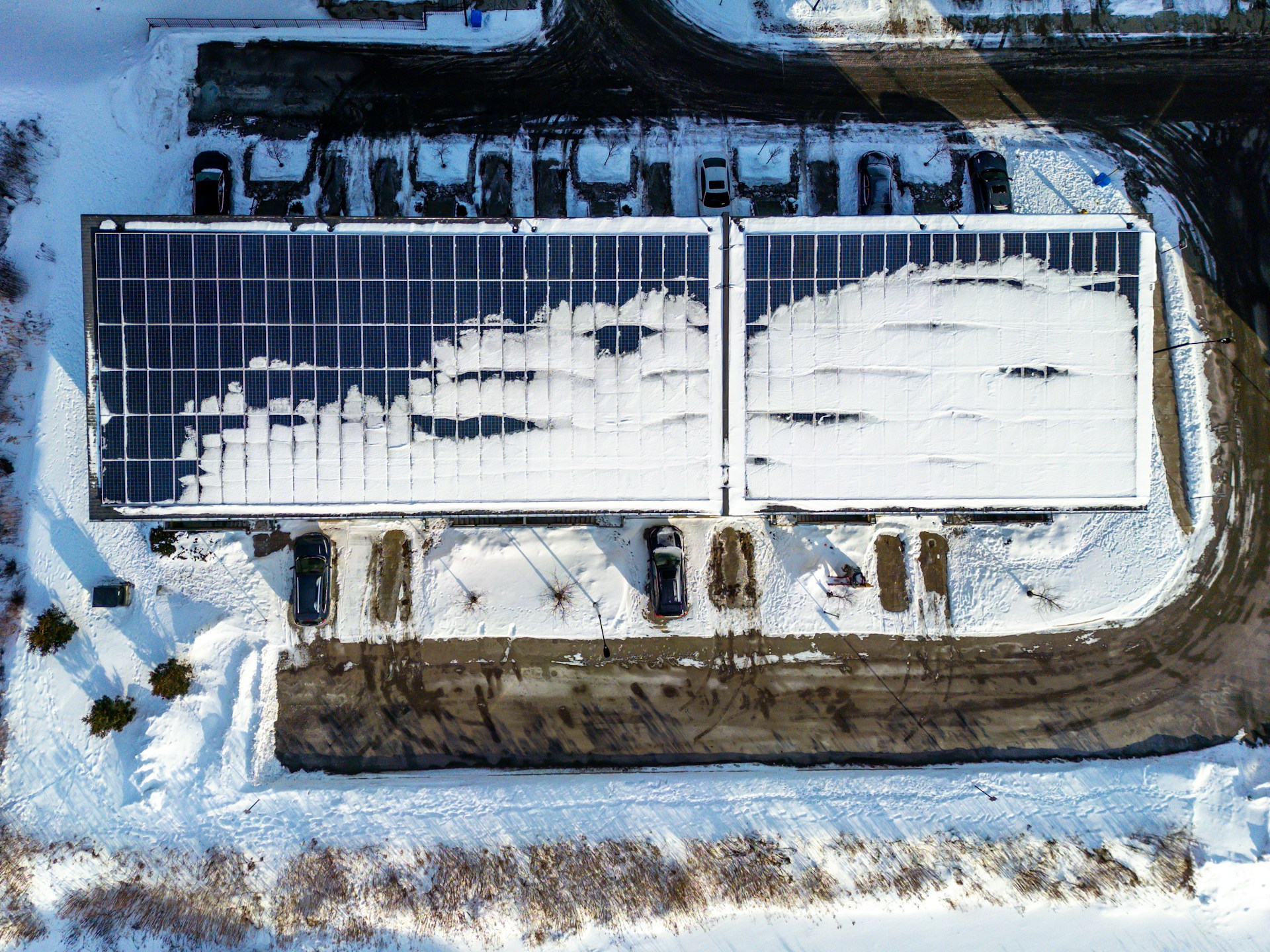
Solar panels in winter snow
❄️
Nugget 06
Solar Systems & Snow: FAQs

New England winters bring real questions about solar performance and safety. Here are the most common things Solect customers ask when the snow starts to fall.

Yes. A full snow cover significantly reduces or halts production. However, most panels are tilted with a smooth glass surface, so snow slides off naturally within a day or two once temperatures recover slightly or the sun warms the module from beneath.
In most cases, no. The production loss rarely justifies the safety risk of rooftop access in winter conditions. If you feel removal is necessary after an extended event, contact Solect. Our technicians have the proper training and equipment to do this safely.
No. Rakes, shovels, and snow blowers can scratch or crack panel glass, damage wiring, and compromise mounting hardware. Only soft, non-abrasive equipment designed specifically for solar panels should ever be used and only by trained professionals.
Seasonal snow loss is factored into your system’s annual production estimates at design time. Winter dips are expected. Shorter daylight and low sun angles also contribute. If summer performance is strong, annual totals will typically meet projections.
Check for a return to normal production within 2–3 sunny days after snow clears. If output remains flat or well below baseline after confirmed clear conditions, contact Solect. Prolonged low output can signal a tripped inverter, connectivity issue, or equipment damage.
Winter Guidance

Contact Solect before attempting any rooftop access in winter conditions. Our team has the training and equipment to assess your system safely after major storms.